
What Is Event Fabrication for Brand Activations?

If you’ve spent any time around events or activations, you’ve probably heard the term "event fabrication" thrown around as if everyone’s aligned on what it means. In reality, most teams aren’t, and that gap usually shows up when timelines tighten and expectations ramp up.
You start with a big idea. Something ambitious. Something with real visibility tied to it. And at some point, it has to move from a deck to the real world. That’s where event fabrication comes in and where the right partner can make the difference between something that simply shows up and something people actually experience.
What Event Fabrication Actually Includes
At its core, event fabrication is the process of turning ideas into physical environments. It’s how concepts become spaces people can step into, interact with, and remember. But it’s not just about building something. It’s about building it in a way that works structurally, visually, and experientially.
Custom builds, structures, and branded physical elements.
This is the foundation of any activation. Custom environments, installations, stages, and display systems define how people move through a space and how they engage with it. These aren’t off-the-shelf solutions. They’re designed around your concept, your audience, and your goals. And they have to hold up in the real world: installing cleanly, functioning properly, and delivering on their promises. That’s where fabrication becomes more than production. It becomes part of the thinking. Structure, materials, finishes, and installation aren’t separate decisions; they’re all connected from the start.
Graphics, signage, and environmental components
While graphics are essential, they should never feel like an afterthought. When fabrication and graphic production are aligned from the start, the results are seamless. Messaging feels intentional, materials feel cohesive, and the environment feels like a unified brand universe. This is the moment a space stops looking merely "branded" and starts feeling like an authentic extension of the brand's identity.
How Event Fabrication Differs From Signage or Print Production
This is where things tend to blur and where many projects lose clarity.
Why fabrication is broader than printing or basic signage.
Print and signage are production services. Fabrication is a build process. A true fabrication partner isn’t just focused on individual outputs. They’re thinking about how everything functions together in a real-world environment, how it’s engineered, how it installs, and how it performs once people start interacting with it. That added layer of thinking is what prevents issues from surfacing late in the process.
Where print and signage fit into the larger build
Print and signage still matter; they’re just part of a larger system. When everything is developed together, there’s no disconnect between what was designed and what gets built. No last-minute adjustments to “make it work.” No compromises that dilute the original idea. Everything shows up the way it was intended.
Common Deliverables for Activations, Events, and Branded Environments
Event fabrication takes different forms depending on the project, but the goal is consistent: create something people don’t just see but engage with.
Temporary event builds and pop-up environments.
Pop-ups and short-term activations move fast, and they don’t leave much room for error. These environments are built to install efficiently, perform reliably during the event, and break down cleanly when it’s over. Modular builds, branded kiosks, and immersive spaces all need to function in real conditions, not just look good in renderings. Because when timelines compress, execution matters even more.
Branded installations, structures, and display elements.
Then there are the larger, more permanent feeling builds. The ones that anchor an experience and give people a reason to stop, engage, and stay. Take our work with the Denver Summit FC, for example. This wasn’t about simply adding branding to a space or a display and hoping for interaction. It was about creating physical moments fans could step into before the game even started.
Working alongside Skylark, we helped bring the Club 5280 Kickoff Event to life through custom fabricated elements designed to draw people in. A mini-pitch activation gave fans a hands-on way to explore the stadium environment. A custom seating area quickly became a natural gathering point and an instant photo opportunity for soccer fans. Large-format signage tied everything together, making sure the brand showed up consistently across the entire space.
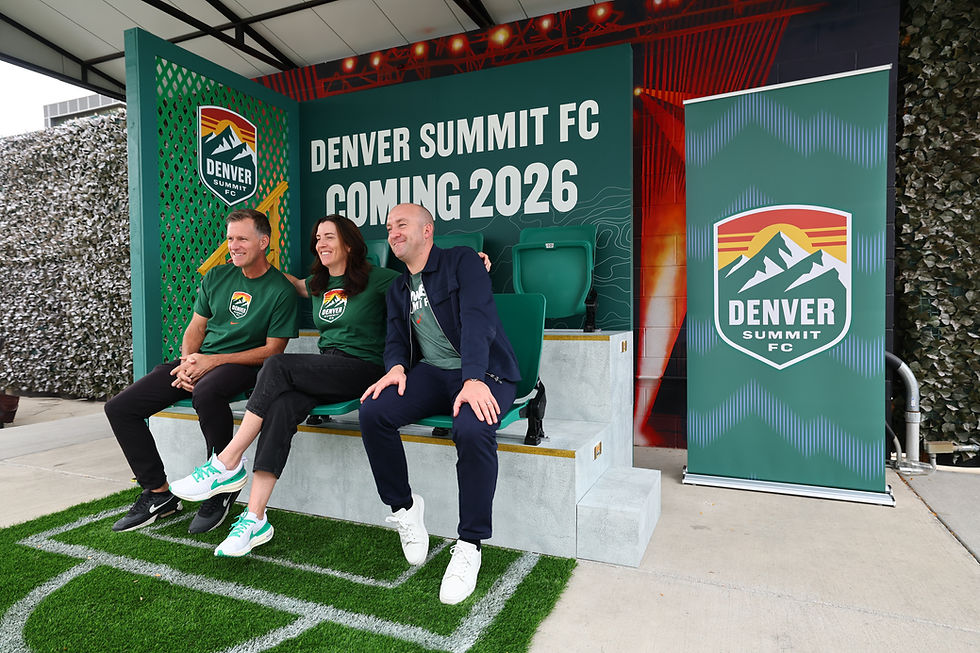
Because the final result was so intuitive, it required no formal explanation; guests naturally gravitated toward the installation, spending time within the space and sharing their experience organically across social media. This is the essential role of fabrication: it transforms a brand activation into a tangible, participatory environment that resonates with the audience and lives on long after the physical structure has been struck.

When to Bring In a Fabrication Partner
If there’s one takeaway that consistently changes the outcome of a project, it’s this: bring your partner in early.
Why earlier collaboration leads to smoother execution
When fabrication is part of the conversation from the beginning, ideas get sharper and execution gets smarter. Concepts are shaped with real-world constraints in mind without losing what made them exciting. Materials, budgets, and timelines are aligned earlier, which reduces friction later. The result is a smoother process and a stronger final build.
What happens when fabrication is brought in too late?
We’ve seen the opposite scenario plenty of times. A strong concept gets handed off late, and suddenly everything has to move quickly. Designs need to be adjusted. Timelines compress. Decisions become reactive instead of intentional. It can still come together, but it’s a very different experience than building something collaboratively from the start.
What Agencies and Brands Should Look For in an Event Fabrication Partner
Not every partner approaches fabrication the same way, and that difference shows up fast.
Full service support vs. fragmented vendors
You can work across multiple vendors, but that often means YOU’RE responsible for keeping everything aligned. When design, graphics, fabrication, and installation live under one roof, things move differently. Decisions happen faster. Gaps disappear. The process becomes more efficient and the outcome more cohesive.
Questions to ask before hiring:
When do you typically get involved in a project?
Do you collaborate on design, or focus on execution only?
What capabilities are handled in-house?
How do you approach installation and logistics?
Can you show work at a similar scale?
How Collaboration Affects Speed, Execution, and Final Quality
At its best, fabrication is a collaborative process. When design, graphics, fabrication, and installation are aligned from the start, projects move faster and come together the way they were intended. There are fewer surprises, fewer compromises, and a clearer path from idea to execution, and the end result reflects that. Because the difference isn’t just in what gets built. It’s in how it’s experienced.
Got something in the works? Let’s chat!


Comments